Six Prototypes Later, Karina Gupta Has a Better Jean
Written by World Studios Staff

Karina Gupta didn’t know the first thing about making jeans. She just knew she hated wearing them. When she set out to solve this problem, she also knew that her lack of expertise might actually be one of her greatest strengths.
That revelation has roots in an experience she had years before ever touching a bolt of denim cloth, back at the very beginning of her freshman year at Vanderbilt, when she first joined World Studios (then called Design for America). She spent all four years of college participating, becoming President in her junior year.
She loved how the projects at World Studios tackled were social-impact focused, from improving college accessibility for a low-income high school, to redesigning the patient experience at a local hospital. She learned what human-centered design was, and how it could help manifest simple solutions to common — and often ignored — everyday problems.
The hospital project, in particular, served as an illuminating example. When she and her teammates interviewed patients to learn about their experience in the ICU, they discovered that trouble sleeping was an almost universal issue. The root cause? Hospital doors equipped with loud, metal bars that clanged loudly when nurses entered and exited rooms. Changing the door mechanism was a simple intervention with the radical potential to make it so patients could actually sleep at night.
The team realized their secret problem-solving strength was that they had come into their interviews without a playbook for how hospitals should work. Their lack of expertise, in this context, allowed them to exhibit real curiosity, ask probing questions, and expose problems that might have otherwise been overlooked. "The humility of not knowing, and seeing that as empowering," is how Karina describes it now.
When she graduated in the spring of 2020, COVID reshuffled what should have been a straightforward path into a software engineering job. On a whim, she added Yale’s 2+2 MBA program to her applications, got in, and started business school at 23 in the middle of a pandemic. She came out with a PM job at Microsoft.
“Even if people have some idea of prototyping or iterating, World Studios really gives you a structure you can actually use as a guiding force.”
At Microsoft, she was bemused to realize that people considered wearing jeans to the office to be a luxury. She hated wearing jeans. A typical pair would fit her in the morning, but be too tight by the evening. Comfortable sometimes, too restrictive the next. "I woke up one morning and realized I wanted to make jeans that actually work for women," she says.
But she didn’t have the first clue how to start designing her own jeans, so she put the whole concept on ice. For a year. Gradually, recalling the hospital experience, she realized what appeared to be a lack of expertise might actually be a source of strength, helping her break from the conventions of an industry that was overlooking a core customer need.
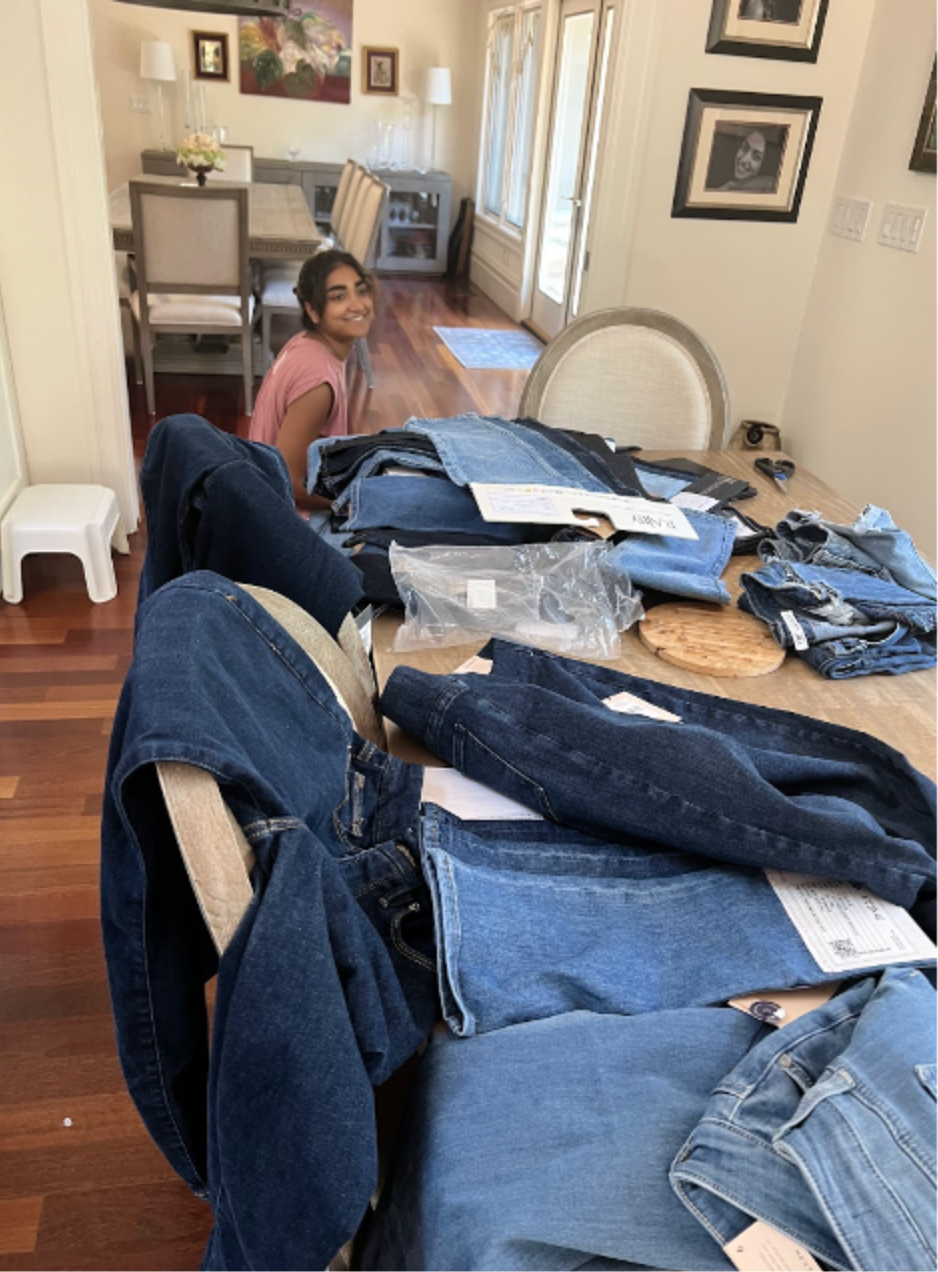
KarinaJ Denim, a slip-on jean built to move with women’s normal daily weight fluctuations, was born.
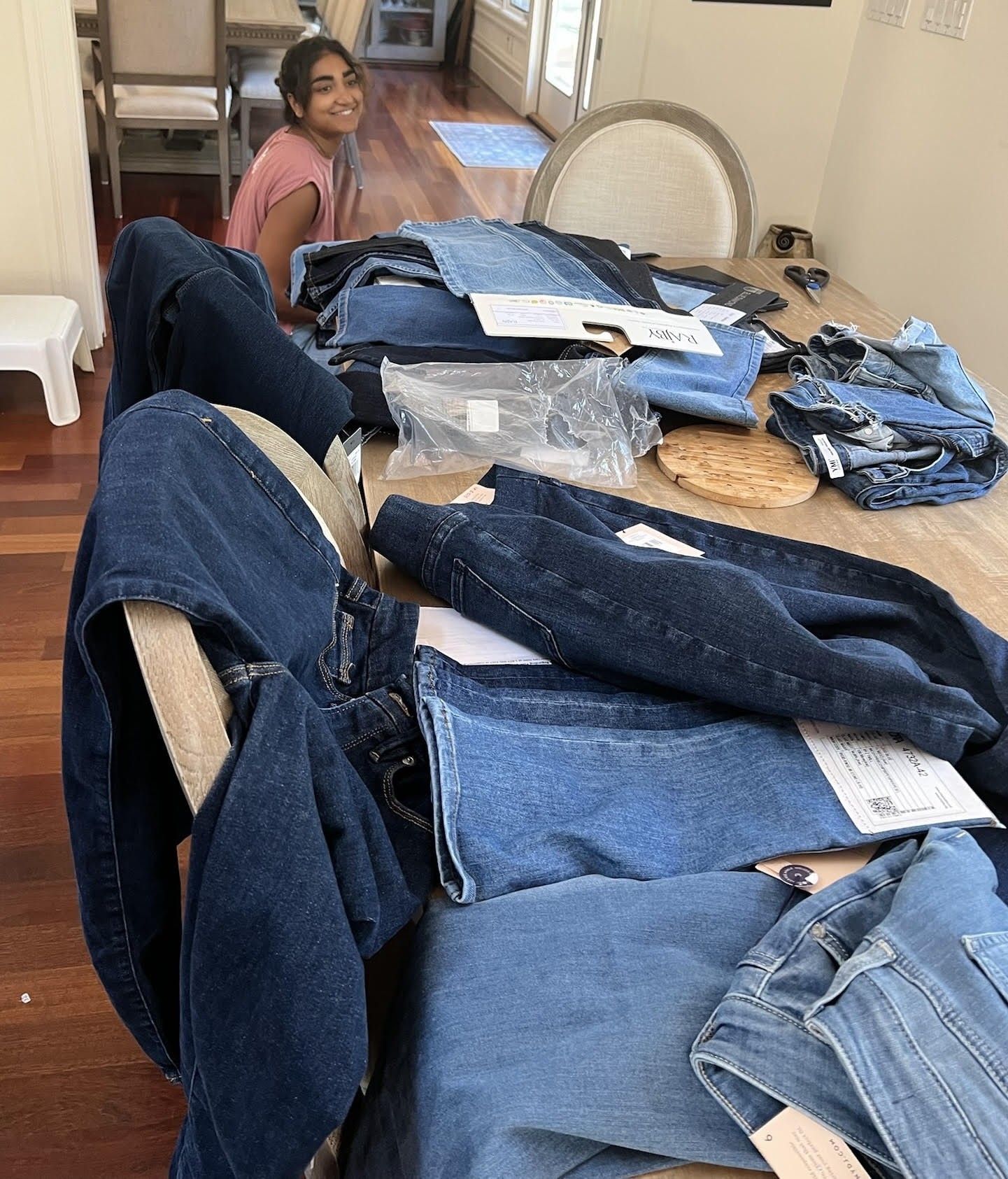
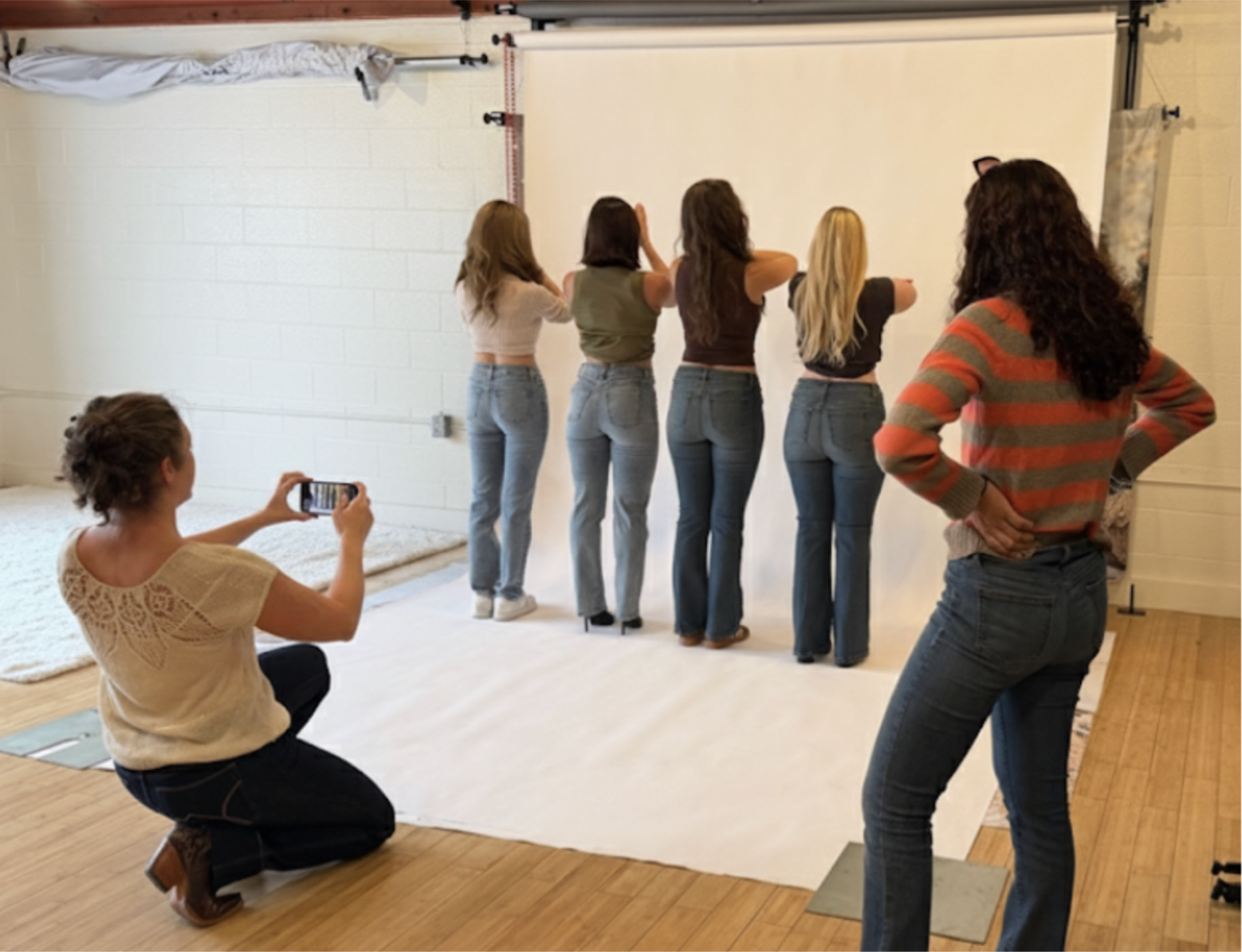
First, she went to trade shows, tracked down fabric, and found her way to technical designers at Levi’s and Athleta, even as many in the small denim industry were hesitant to work with someone new. Back at Yale, she kept going full steam ahead. She launched KarinaJ Denim on Kickstarter in February of this year, hit her $10,000 goal in pre-orders within 72 hours, and went on to raise over $16,000 from 144 backers by the time the campaign closed. She also hosted a string of parties, low-key gatherings where friends and strangers alike could try the jeans on and help generate buzz.

Karina graduated in May. Her first inventory run arrived just a few weeks later, the culmination of a company that had been theory, then prototypes, then pre-orders. Now she has a website, social media, and actual jeans in hand. "There’s something surreal about going from an idea I didn’t know how to make to seeing women actually wearing the jeans—and loving them," she says of the moment.

Looking back, she can still trace her evolution right back to her time at World Studios, where she first learned that understanding the problem is its own kind of expertise. "Even though I have no context of jeans, I know nothing of jeans," she says, " I am someone who understands the problem, and that in and of itself makes me a good person to figure out the solution."