Tanvi Mittal Is Building a Better Way to Train for Difficult Airways
Written by World Studios Staff
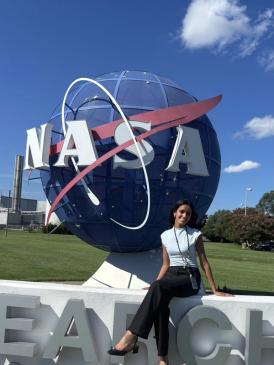
Tanvi Mittal likes to solve problems with her hands. That’s one of the reasons that, right now, she happens to be co-leading a project team of seven, building a modular training mannequin for medical residents. Two years ago, she was the newest person on a different project, still learning what running a project like that could even look like.
Tanvi joined World Studios, then still called Design for America, her sophomore year at RISD, right after declaring industrial design as her major. Her first year had been hectic, spent mostly inside the bubble of art school.. But she knew she wanted a chance to work with real users and see how her designs interacted with the real world.
The first project she applied to work on came from the Providence Housing Authority. It was a lot UI/UX work, something Tanvi had never done, but her team lead, Audrey Chu, worked with her closely, teaching her skills she hadn’t had before — like how to use Figma and the basics of building a brand. Audrey ran the team so well that she inspired Tanvi to take on project leadership herself.
The following year, she stepped up.
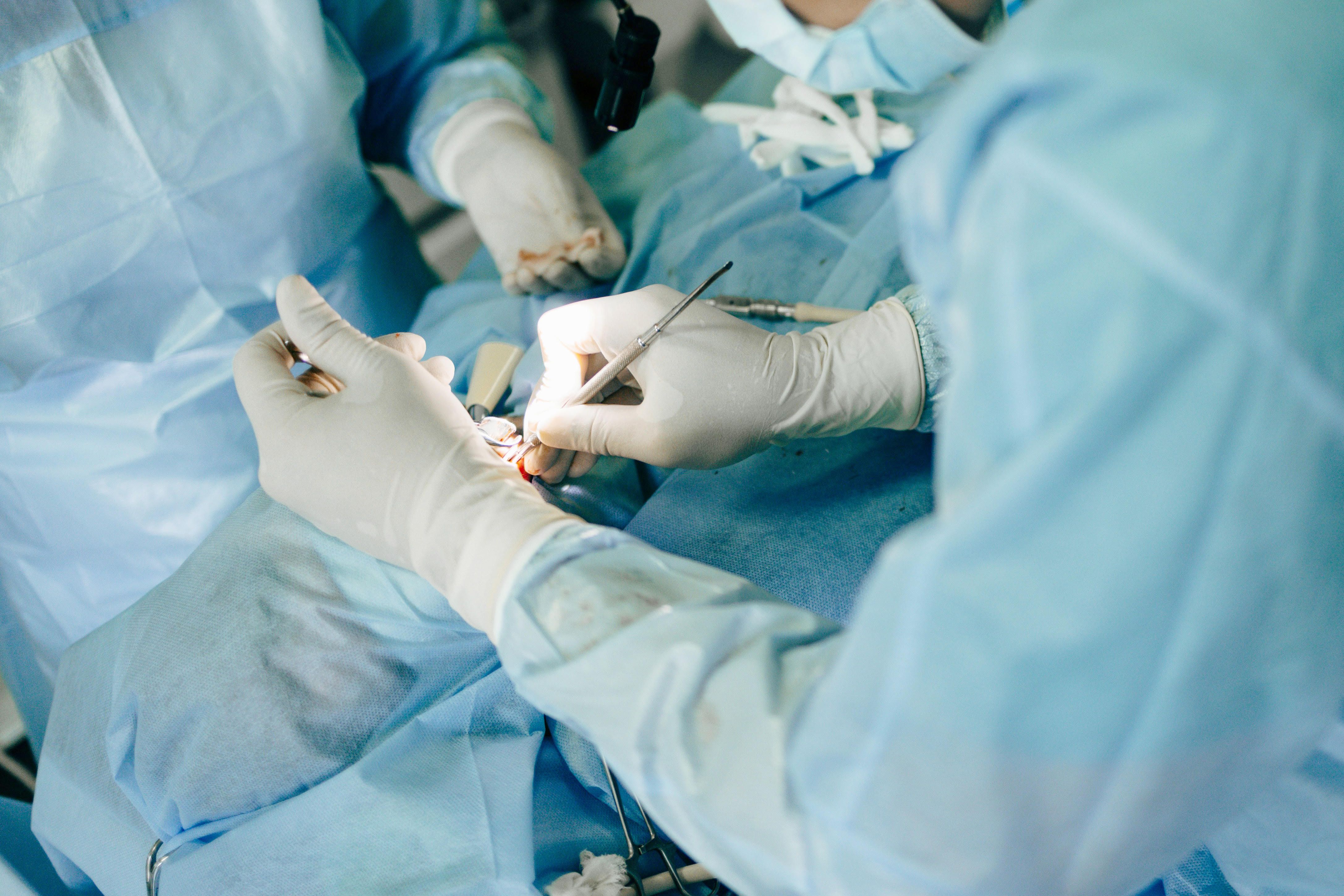
She and a friend, Vivian Wang, spent the summer before junior year contacting institutions across Brown, RISD, and local government to find a project idea. A chance encounter with a visiting lecturer at Brown became the turning point: medical residents, the lecturer explained, often practice intubation on mannequins built to a single standardized male anatomy, leaving them unprepared for the range of airways they’ll encounter in real emergencies. Existing training mannequins didn’t reflect that variety.
She and Vivian built a team of seven, split evenly between Brown and RISD, with four industrial designers along with students majoring in biology and cognitive science. It was enough technical range to run CAD work and prototyping, without the project tipping into pure engineering. "I think we got very lucky in that everyone seemed to really get along, a good mix of characteristics,” Tanvi said. "We had this natural chemistry."
Their first step was research. The team wanted to know exactly what they were solving for, and how, before committing to a design. They interviewed residents and clinicians to understand what actually goes wrong during a real intubation attempt, studied training mannequins already on the market to see what worked and what didn’t, and began researching acceptable substitutes for medical-grade silicone that could still hold up to repeated casting and testing on a student budget.
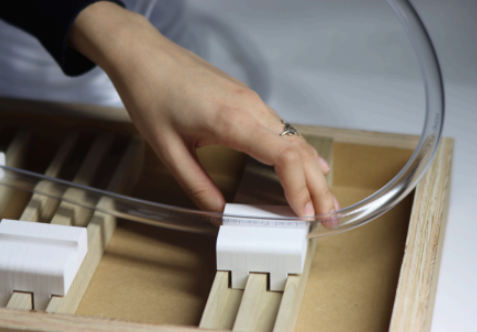
From there, they moved into designing and testing. The mechanism central to the mannequin’s function is a sliding rail system that sets the trachea and can be adjusted at different points to mimic a difficult airway. Getting this right took a long stretch of trial and error, figuring out what kind of rail system could be effective, durable, and — most importantly — intuitive. "This product cannot be something that is too tedious to use, because then doctors and medical students won’t use it," Tanvi said. "Efficiency is really important, and something we really need to honor in our design."
“This product cannot be something that is too tedious to use, because then doctors and medical students won’t use it.”
Prototypes were printed, cast, and often failed. The team tried again each time.
During this time, the team reconnected with the Brown professor who’d first introduced Tanvi to the problem. She was glad to help, and willing to introduce them to people in her own network. From there, they started building out a spreadsheet of forty or fifty contacts, people they found inspiring alongside people they met through those introductions. Cold emailing and introductions through contacts of contacts did most of the work from there. One of those chains led to Dr. Andrew Maslow at Rhode Island Hospital, who offered to show the team how intubation works and lent them an airway mannequin for a semester so they could study it directly while their own prototypes were still taking shape.
None of it has moved as fast as they expected. The team thought they’d have a proof of concept by the end of last year. Instead, they had a proof of mechanism. But they’ve gained experience, a deeper understanding of the problem, and relationships to experts that will provide critical support for the work as it continues. Also, something Tanvi didn’t entirely expect: friendship.
“World Studios gave me the most amazing set of people. It’s a highlight of my college experience.”
To work on the project, the team met twice a week, every week, for the entire year. Sessions meant to be an hour frequently stretched into three, without anybody noticing. For a fall social, they all attempted to bake a cake together. "It was hideous!" Tanvi laughs. "But we had a great time." Nights like that added up alongside the meetings, the dinners, the long hours spent on the same work. Looking back on the year, Tanvi says, "World Studios gave me the most amazing set of people. It’s a highlight of my college experience."